A robotic operation still depends on a surgeon, a suitable cancer operation, and careful patient selection. By the end, you will understand how the system works, which cancer procedures may use it, what its advantages and limits are, and how to judge whether it fits a treatment plan.
Key takeaways
- The surgeon controls every robotic instrument movement at the console.
- Robotic surgery may suit selected prostate, colorectal, gynecologic, and abdominal cancers.
- Compare robotic surgery with open surgery and laparoscopy for each operation.
- Ask how robotic surgery fits with chemotherapy, radiotherapy, and cancer staging.
How a Surgeon Uses a Robotic System During Cancer Surgery
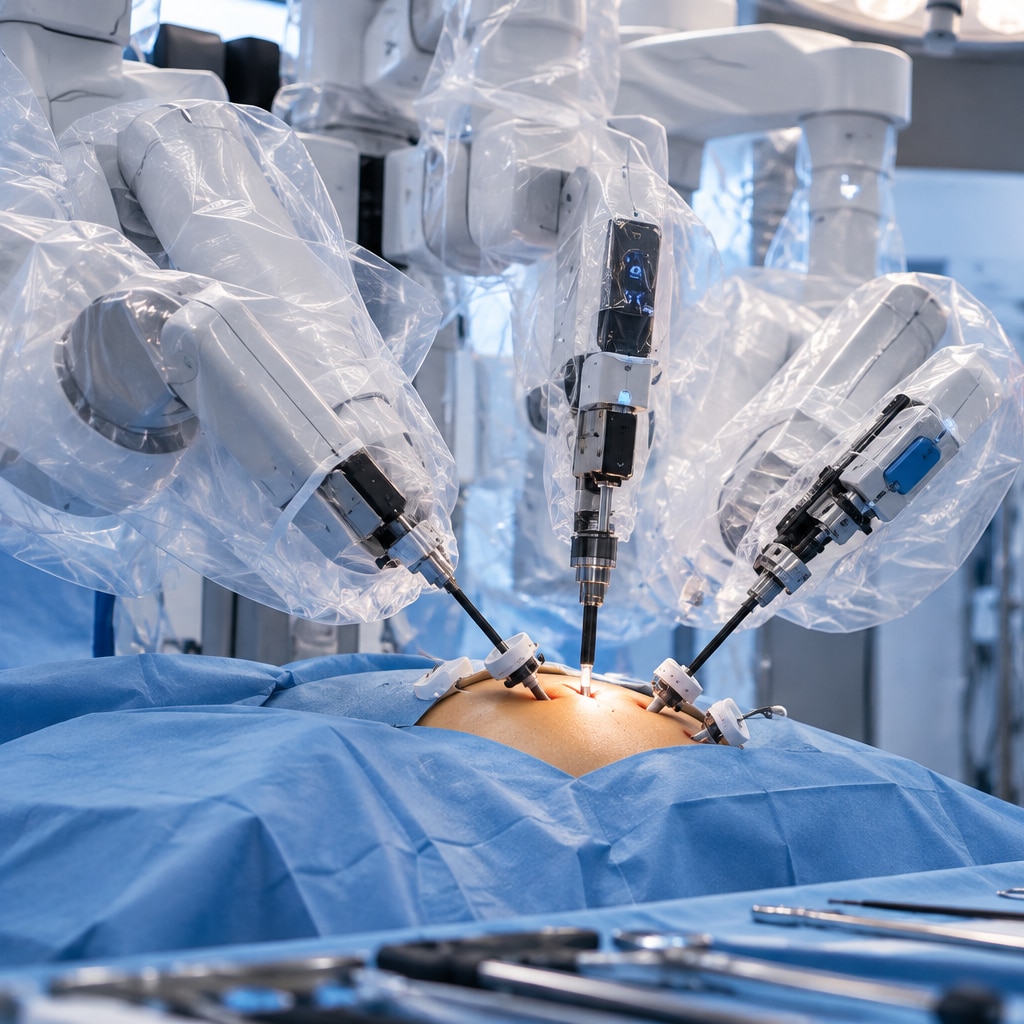
Robotic surgery means a surgeon performs minimally invasive cancer treatment through a surgeon-controlled console. The robot does not diagnose cancer, choose the operation, or act independently. The surgeon remains responsible for every movement, while the system holds and moves the camera and instruments inside the body through small incisions.
In practice, the surgeon:
- Places ports through the small incisions and positions the robotic arms over them.
- Views the operating area through a camera that provides magnified, three-dimensional vision.
- Controls wristed instruments that bend and rotate inside the body more freely than straight laparoscopic tools.
- Moves their hands at the console while the system translates those movements into precise instrument movements at the tumour site.
The robot filters natural hand tremor and can scale large hand movements into smaller instrument movements. It does not make the operation risk-free: bleeding, infection, injury to nearby organs, anaesthetic complications, and conversion to open surgery remain possible.
The aim is not simply to use advanced equipment. The surgeon must remove the tumour completely, obtain appropriate margins, assess required lymph nodes, and avoid tumour spillage.
For example, robotic partial nephrectomy for selected kidney cancers removes the tumour while preserving functioning kidney tissue, but radical nephrectomy or open surgery can be safer when tumour position or bleeding risk makes preservation unsuitable.
Which Cancer Operations May Be Performed Robotically
Robotic cancer surgery is considered for operations in confined spaces or around structures that need precise dissection, not for a cancer label alone. Selected prostate cancer surgery, uterine cancer operations, colorectal resections, kidney-sparing surgery, bladder removal, lung resections, and upper gastrointestinal procedures may use it.
The surgeon must still achieve the same cancer-control objective as with open surgery.
| Cancer area | Possible robotic operation | Why location and stage matter |
|---|---|---|
| Prostate cancer | Robotic radical prostatectomy | Localised disease may permit removal through small ports; tumour position determines whether nerve-sparing is safe. |
| Uterine cancer | Robotic hysterectomy with staging | A uterus-confined tumour may suit this approach; bulky disease or spread outside the pelvis can require another operation. |
| Cervical cancer | Selected cervical cancer surgery, including radical hysterectomy | For early-stage disease, the LACC randomised trial found worse disease-free and overall survival with minimally invasive radical hysterectomy in its study population. Tumour size, technique, selection, and surgeon experience matter. |
| Kidney cancer | Robotic partial nephrectomy | A small, accessible tumour may be removed while preserving functioning kidney tissue; a central, large, or invasive tumour may require radical nephrectomy or open surgery. |
| Colorectal, bladder, lung, and upper gastrointestinal cancers | Selected resections | Robotic access depends on whether the tumour can be removed fully with safe margins and adequate lymph-node treatment. |
Tumour size, exact location, local invasion, distant metastases, previous abdominal operations, and anaesthetic fitness all affect the decision. A technically possible robotic operation is unsuitable if it compromises cancer clearance or safe reconstruction.
Robotic Surgery Compared with Open Surgery and Laparoscopy
Open surgery versus robotic surgery is primarily a difference in access, not a choice between cancer treatments. Open surgery uses a larger incision, while laparoscopic surgery and robotic surgery use small ports for a camera and instruments. Robotic systems add surgeon-controlled motion, 3D visualisation, and wristed instruments that improve movement in confined spaces.
| Option | How it differs | Trade-offs |
|---|---|---|
| Open surgery | Direct access through a larger incision | Wider exposure and tactile feedback, but usually more wound pain, blood loss, and recovery time |
| Laparoscopic surgery | Small ports with a camera and rigid instruments controlled at the operating table | Smaller incisions, but limited instrument movement and less ergonomic control |
| Robotic surgery | Small ports, a console, magnified 3D visualisation, and wristed instruments | Greater technical control in difficult angles, but more equipment, setup, and specialised training |
Robotic surgery does not guarantee a shorter operation, fewer complications, or complete avoidance of open surgery. Bleeding, adhesions, unclear anatomy, locally advanced disease, an unsafe margin, or anaesthetic problems can require conversion; this is a safety decision. In the ROLARR rectal-cancer trial, robotic surgery did not significantly reduce conversion risk in the primary analysis.
Cancer control still depends on tumour biology, staging, complete removal, clear margins, and appropriate lymph-node assessment. In prostate surgery, robotic treatment can reduce blood loss and hospital stay, but urinary incontinence and erectile dysfunction remain possible. A robot cannot remove those risks.
How Surgeons Decide Whether Robotic Surgery Is Safe and Appropriate
Robotic surgery eligibility begins with a question: can the team complete the same cancer operation safely and completely through minimally invasive access? A smaller incision does not compensate for inadequate margins, tumour spillage, or incomplete lymph-node assessment.
Surgeons weigh these factors before choosing the approach:
- Patient fitness: Anaesthetic risk, lung and heart function, body habitus, previous abdominal or pelvic operations, adhesions, and ability to tolerate prolonged positioning affect safety.
- Tumour details: Tumour staging, size, site, local invasion, distant metastases, and proximity to major vessels or organs determine whether robotic instruments can achieve a complete resection.
- Cancer objectives: In colon or rectal surgery, the operation must remove the affected bowel and draining lymphovascular tissue while preserving accepted longitudinal and circumferential margins. In kidney cancer, partial nephrectomy is suitable only when the tumour can be removed with a negative margin while preserving useful kidney tissue.
- Team capability: Ask about experience with the specific procedure, anaesthesia and positioning, bleeding control, postoperative care, complication and readmission rates, margin and lymph-node results, and conversion rates.
A surgeon should also explain the planned conversion to open surgery if bleeding, invasion, adhesions, or poor visibility makes the minimally invasive route unsafe. For early-stage cervical cancer, discuss open radical hysterectomy carefully: the LACC trial found worse disease-free and overall survival with minimally invasive radical hysterectomy in its study population.
At Dr Gawande Oncocare Centre, use the surgical discussion to compare the robotic plan with open surgery, laparoscopy, and non-surgical treatments rather than treating the robot as the default.
Where Robotic Surgery Fits in the Complete Cancer Treatment Plan
A robot-assisted operation is one step in cancer control, not the whole treatment. Its purpose is to remove the tumour safely, preserve useful tissue when possible, and provide a specimen and lymph nodes for pathology-based staging.
During surgery, the surgeon must follow oncologic principles: remove the involved bowel segment and draining lymphovascular tissue in colorectal cancer, avoid tumour spillage, or balance negative surgical margins with kidney preservation during partial nephrectomy.
A minimally invasive access route does not justify a less complete resection; open surgery or radical removal may be safer when cancer control demands it.
Pathology, imaging, stage, tumour biology, molecular findings, and recurrence risk determine what happens next. The multidisciplinary cancer care team may recommend:
- Chemotherapy before surgery to shrink or control disease.
- Chemotherapy after surgery when pathology shows a recurrence risk that warrants systemic treatment.
- Radiation before or after surgery when local control requires it.
- Immunotherapy, targeted treatment, or hormone therapy when the cancer’s biology supports those treatments.
The operation may make recovery easier, but it does not independently diagnose cancer, choose follow-up treatment, or guarantee longer survival. Your team uses the final pathology report and surgical results to decide whether surveillance or additional treatment is appropriate.
Frequently asked questions
How does a surgeon use a robotic system during cancer surgery?
The surgeon operates from a console, viewing a magnified image and controlling instruments inserted through small incisions. The robot does not diagnose cancer, select the operation, or move independently.
Which cancer operations may be performed robotically?
Selected prostate, colorectal, gynecologic, kidney, bladder, and other abdominal cancer operations may be performed robotically when the tumour location, disease stage, and surgical plan are suitable.
How does robotic surgery compare with open surgery and laparoscopy?
Robotic surgery uses small incisions like laparoscopy but gives the surgeon a stable, magnified view and wristed instruments. Open surgery uses a larger incision and may be preferable when extensive access or tumour removal requires it.
How do surgeons decide whether robotic surgery is safe and appropriate?
They assess the cancer’s type, size, location, stage, spread, previous operations, overall health, and the surgeon’s experience, then compare robotic, laparoscopic, and open approaches.
Where does robotic surgery fit in the complete cancer treatment plan?
It is one part of treatment planning. Doctors may combine surgery with chemotherapy, radiotherapy, targeted therapy, immunotherapy, or surveillance according to the cancer type and stage.