A cancer diagnosis alone does not explain which treatment will work: two tumors in the same organ can carry different biological features and respond differently to the same drug. By the end, you will understand how doctors move from a biopsy and pathology report to tumor profiling, interpret the result, and decide when it can change treatment.
Key takeaways
- Tumor profiling identifies biological changes that can guide targeted treatment choices.
- A biopsy report must be interpreted alongside cancer type, stage, health, and prior treatment.
- Tumor tests do not replace inherited-risk testing for family cancer risk.
- Ask how a result changes your treatment options before ordering a test.
What precision oncology adds to standard cancer treatment
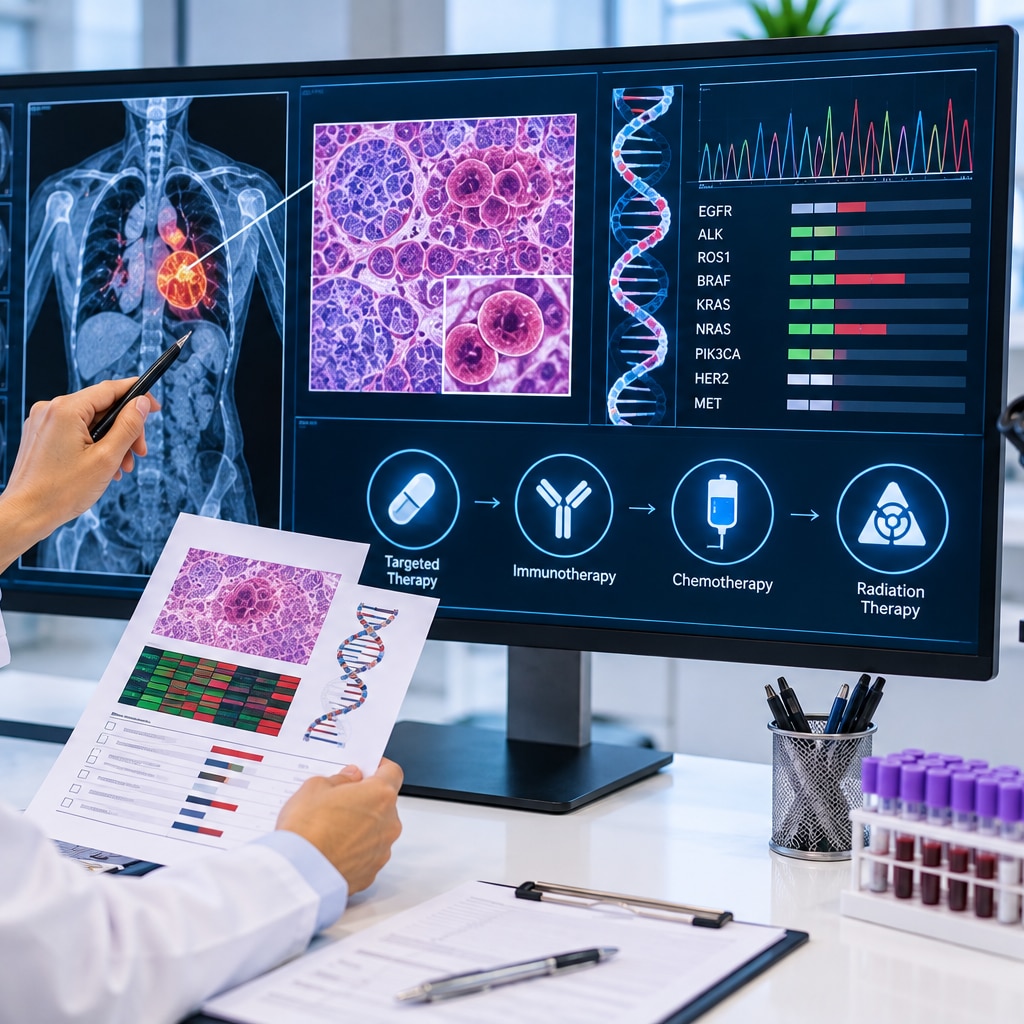
The precision oncology definition is straightforward: treatment choices are guided by an individual tumor’s measurable biology, not only by its location or stage. Precision oncology uses tumor characteristics such as DNA mutations, gene fusions, protein expression, mismatch-repair status, and tumor mutational burden to support personalized cancer treatment.
| Approach | Main basis | What it adds or cannot show |
|---|---|---|
| One-size-fits-all model | Cancer type and common treatment pathway | Misses biological differences between tumors |
| Standard chemotherapy | Drugs that damage or stop rapidly dividing cells | Can treat widespread disease but does not target every tumor’s specific vulnerability |
| Surgery | Tumor location, size, spread, and resectability | Removes visible disease but cannot treat cancer cells elsewhere in the body |
| Precision oncology | Molecular findings combined with pathology, imaging, and stage | Identifies targeted drugs, immunotherapy options, resistance clues, or relevant trials |
The phrase standard chemotherapy versus precision oncology describes different roles, not two mutually exclusive choices. Molecular results can help select chemotherapy, targeted therapy, immunotherapy, radiation, or surgery; they do not replace conventional diagnosis, pathology, or staging.
A mutation is not an automatic prescription: the same alteration can have different meaning in different cancer types. For localized cancers, anatomical stage and whether surgeons can remove the tumor often remain decisive.
A result saying “no actionable mutation found” does not mean treatment options are exhausted; it means no tested alteration had a sufficiently supported matched therapy.
How a tumor sample becomes a treatment plan
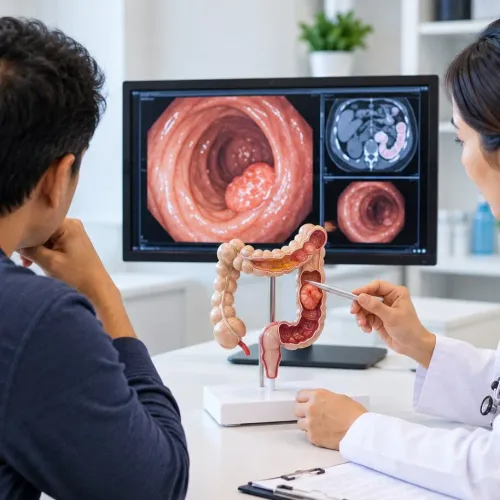
A tissue biopsy does not go straight to a drug choice. The team first confirms the cancer type, grade, location, and stage, then checks whether the sample can support additional testing without compromising the diagnosis.
1. Pathology review examines the tissue under a microscope and uses stains such as immunohistochemistry to identify the cancer and important features. The report also confirms whether enough viable tumor remains for testing.
2. A biopsy for tumor profiling uses DNA, RNA, or protein-based assays to detect alterations and biomarkers that could influence treatment. A tissue biopsy is preferred for many cancers, but a blood-based liquid biopsy can help when tissue is insufficient or inaccessible.
3. The laboratory reports findings with their clinical significance, including whether a change has a matched therapy, supports a clinical trial, or has uncertain meaning. “Insufficient tissue” is not a negative result; it means the test could not be interpreted reliably.
4. A multidisciplinary review brings together the oncologist, pathologist, surgeon, radiologist, and other specialists. They compare the molecular report with stage, imaging, resectability, previous treatment, other illnesses, and your goals.
5. Treatment selection may involve surgery, radiation, chemotherapy, immunotherapy, a targeted drug, a trial, or symptom-focused care. Follow-up imaging, examination, and laboratory results show whether the plan is working; progression can lead to repeat testing because cancer cells change over time.
What tumor profiling measures and how doctors interpret it
Profiling can detect DNA mutations, gene fusions, copy-number changes, protein expression, mismatch-repair deficiency, microsatellite instability, and tumor mutational burden. These findings describe how cancer cells grow or evade immune attack; they do not replace pathology or staging.
| Finding | How doctors use it | What can limit the conclusion |
|---|---|---|
| Activating DNA mutation or gene fusion | Match a targeted drug, where evidence supports that cancer type | The same alteration can respond differently across cancers; resistance can develop |
| Copy-number change or protein expression | Support a treatment choice, risk assessment, or clinical-trial search | The finding may be prognostic rather than predictive of drug benefit |
| PD-L1 expression, mismatch-repair deficiency, or high tumor mutational burden | Assess eligibility for selected immunotherapies | PD-L1 testing before immunotherapy is not a universal rule; the assay and cutoff depend on the drug and cancer |
| NTRK fusion or another tissue-agnostic biomarker | Consider a treatment across tumor sites when regulatory criteria are met | A loosely similar laboratory result does not guarantee eligibility |
A detected biomarker becomes actionable only when the drug–biomarker link has credible evidence and fits the cancer type, previous treatment, health status, access, and trial availability. A positive result can support treatment without guaranteeing response; a negative result can rule out a targeted drug while leaving other treatments open.
“No actionable mutation found” means no supported match was identified, not that the tumor has no mutations. Limited tumor content, an uncovered alteration, or cancer evolution can explain the result; progression may prompt repeat tissue or selected circulating-tumor-DNA testing.
Tumor testing, inherited risk, and the limits of a test result
Somatic tumor testing examines DNA or RNA changes acquired by cancer cells. It uses a biopsy or surgical specimen to look for alterations that might guide treatment; those changes usually began in the tumor and are not present in every cell of your body.
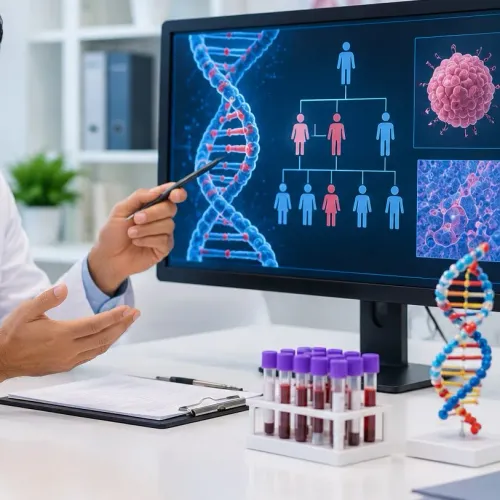
Germline genetic testing asks a different question: does a variant exist in normal cells, usually tested from blood or saliva? A confirmed germline variant can indicate inherited cancer susceptibility and affect relatives. A tumor result that suggests such a variant needs confirmatory germline genetic testing and genetic counseling; tumor sequencing alone cannot establish inheritance.
A result is useful only when the sample, assay, and interpretation fit the cancer and proposed drug. “Insufficient tissue” means the laboratory could not obtain enough viable tumor or usable DNA or RNA; it is not a negative result.
A negative result means that test found no reportable alteration, not that the cancer has no treatment-sensitive biology. An uncertain variant lacks evidence for treatment selection.
Markers such as microsatellite instability and mismatch-repair deficiency can support immunotherapy decisions, but the required assay and cutoff depend on the cancer and drug. A positive marker does not guarantee response, and a negative one does not eliminate every option.
One biopsy can miss another tumor region, and treatment can select resistant cells, so progression may justify repeat tissue or circulating-tumor-DNA testing.
When profiling is most useful in real treatment decisions
Profiling is most useful when a result could change the next treatment, not simply add detail to the record. The strongest cases include advanced and metastatic cancer, recurrent cancer, treatment-resistant cancer, rare tumors, and cancers with established treatment-linked biomarkers.
For many localized cancers, stage, resectability, pathology, and imaging still determine curative surgery or radiation more than a mutation does.
| Situation | Why profiling helps | Practical caution |
|---|---|---|
| Advanced and metastatic cancer | Finds targetable changes and trial options after diagnosis or progression | A biopsy from one site may not represent every metastasis |
| Recurrent cancer | Reveals whether the biology has changed since the first treatment | Preserve the original tissue and compare new findings with prior reports |
| Treatment-resistant cancer | Can identify resistance mechanisms or a different treatment route | A detected alteration does not prove a drug will work |
| Rare or biomarker-defined cancer | Improves access to specialist therapies or trials | Large panels produce uncertain findings that need expert interpretation |
Order testing early enough to avoid a treatment delay, but do not consume a small biopsy needed to confirm the diagnosis or perform immunohistochemistry.
Ask whether the tissue is adequate, how long the assay will take, and whether a blood test is a sensible alternative; a negative liquid-biopsy result is less conclusive when the tumor sheds little DNA.
- The finding has clinical evidence, not merely a laboratory label.
- The matching drug, trial, or approval is actually accessible.
- Progression justifies repeat tissue or circulating-tumor-DNA testing.
A molecular tumor board can weigh these issues with pathology, imaging, prior treatment, comorbidities, and your goals. Dr Gawande Oncocare Centre can help place a profiling result alongside chemotherapy or surgical decisions rather than treating the report as the treatment plan.
Frequently asked questions
What does precision oncology add to standard cancer treatment?
It adds measurable tumor biology—such as mutations, gene fusions, protein expression, mismatch-repair status, and tumor mutational burden—to decisions already based on cancer type, stage, and overall health.
How does a tumor sample become a treatment plan?
A biopsy is preserved, tested in a laboratory, and reported with detected biomarkers. Your oncology team then matches those findings with approved treatments, clinical trials, previous therapies, and your treatment goals.
What does tumor profiling measure?
Tumor profiling can measure DNA mutations, gene fusions, protein expression, mismatch-repair or microsatellite-instability status, and tumor mutational burden. The useful result depends on the cancer and the treatment being considered.
Is tumor profiling the same as inherited cancer-risk testing?
No. Tumor profiling examines cancer cells, while inherited-risk testing examines DNA from blood or saliva to identify changes present throughout the body. A tumor result alone cannot establish family cancer risk.
When is tumor profiling most useful?
It is most useful when a result could change treatment, such as identifying a targeted therapy, supporting immunotherapy selection, or opening a relevant clinical-trial option. Ask what decision the test is intended to inform.