A new breast lump, nipple change, skin alteration or persistent swelling deserves clinical assessment, but no single symptom can confirm or exclude breast cancer. You will learn which changes need prompt review, how examination and testing establish a diagnosis, and how pathology, stage and personal circumstances shape treatment choices.
Key takeaways
- Seek prompt review for a new lump, skin dimpling, nipple inversion, or bloody discharge.
- Do not assume a breast lump is cancer; arrange a clinical examination and recommended imaging.
- Diagnosis may involve mammography, ultrasound, biopsy, and tests that identify tumour biology.
- Treatment depends on stage, tumour biology, inherited risk, and your overall health.
Which breast changes need prompt medical review?
A new breast lump is the most common sign of breast cancer, but most breast lumps are not cancer. Seek prompt medical review for a new breast lump, breast thickening, persistent breast swelling, skin dimpling, peau d’orange skin, nipple inversion, spontaneous nipple discharge, bloody nipple discharge, or a breast size or shape change.
Breast pain alone is not a reliable cancer warning, but persistent, focal, or unusual pain still deserves assessment.
- Rapid breast enlargement with redness, warmth, heaviness, or nipple inversion can indicate inflammatory breast cancer, even without a distinct lump.
- Mastitis can look similar. If redness or swelling does not improve after appropriate treatment, request diagnostic imaging and, if needed, a biopsy rather than repeating antibiotics.
- Do not dismiss a persistent change because a previous screening mammogram was normal; symptomatic abnormalities need clinical follow-up.
| Change | What to do |
|---|---|
| New lump, thickening, swelling, dimpling, discharge, or shape change | Arrange a prompt appointment with a doctor or breast clinic. |
| Rapid redness, warmth, enlargement, or peau d’orange skin | Seek urgent medical review, especially if treatment for mastitis is not helping. |
| Severe bleeding, breathing difficulty, or sudden weakness, confusion, or speech trouble during known cancer illness | Seek emergency care immediately. |
Do not repeatedly massage or examine the area instead of booking an assessment.
What should you do after finding a breast change?
Contact a doctor who can arrange breast assessment within a few days; do not wait for your next routine breast screening appointment. A persistent or visible change needs review even after a normal screening mammogram. Do not repeatedly massage, squeeze, or examine the area instead of booking care.
During the first visit, expect:
- Questions about when the change began, whether it is changing, and any discharge, pain, fever, or previous breast problems.
- A clinical breast examination, including inspection of both breasts while your arms rest at your sides and rise above your head.
- An armpit examination for enlarged or tender lymph nodes.
- Documentation of the location and characteristics of a finding, including its size, firmness, mobility, skin changes, and relationship to the nipple.
Your clinician will choose imaging according to your age, examination findings, breast density, and risk:
| Option | Main use | Important point |
|---|---|---|
| Mammography | Diagnostic mammography and breast screening | Useful for masses and calcifications; a negative screening mammogram does not exclude a new symptomatic cancer. |
| Breast ultrasound | Palpable findings and younger patients | Helps distinguish a fluid-filled cyst from a solid lesion. |
| Breast MRI | High-risk screening or unresolved findings | It is a problem-solving test, not a universal replacement for mammography or biopsy. |
Imaging cannot settle every case. If concern remains, ask what follow-up or tissue sampling is needed.
How is breast cancer diagnosed and staged?
Clinicians determine whether a breast abnormality is cancer through triple assessment, which combines:
- Clinical examination of the breast and nearby lymph nodes
- Breast imaging
- Tissue diagnosis
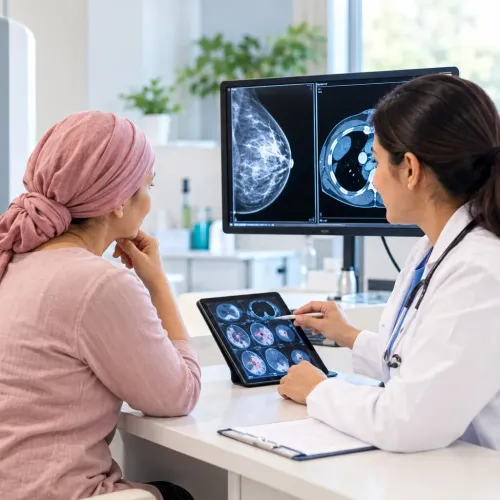
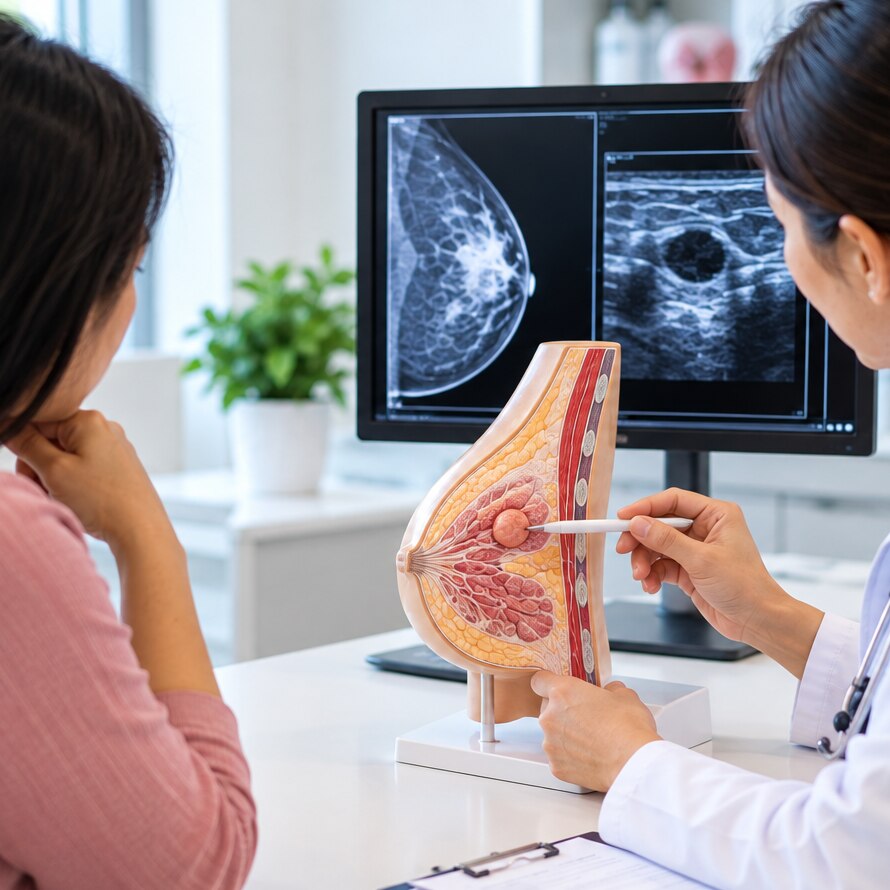
Imaging depends on your age, breast density and the finding. Ultrasound for cystic or solid lesions is commonly used for a palpable abnormality, particularly in younger patients. Diagnostic mammography is important for calcifications and assessment of older patients.
Breast MRI helps solve uncertain findings or assess people at high inherited risk; it does not replace biopsy.
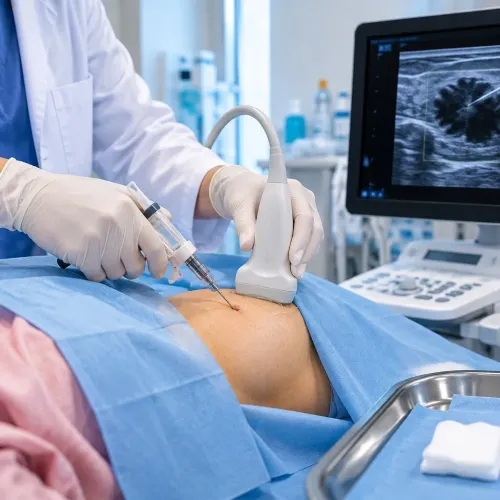
A core-needle biopsy removes tissue for histology, which confirms whether cancer is present and identifies its type. The pathology report also guides treatment by recording:
- Estrogen receptor and progesterone receptor status
- HER2 status
- Ki-67, when clinically relevant
- Tumour grade, which describes how abnormal and fast-growing the cells appear
A normal screening mammogram does not rule out a new, persistent abnormality. Arrange further clinical assessment, diagnostic imaging or biopsy when the finding remains concerning.
Staging defines the cancer’s extent after diagnosis. It records tumour size, local invasion, lymph nodes and distant metastasis. Depending on the tumour, symptoms and examination, clinicians may use:
- CT to examine the chest, abdomen or pelvis
- Bone imaging when spread to bone is suspected
- PET/CT for selected cases requiring whole-body assessment
People with small, symptom-free early cancers do not automatically need every staging scan.
Which treatments are used for breast cancer?
Surgery removes the tumour from the breast. Breast-conserving surgery removes the tumour with a rim of normal tissue; mastectomy removes the entire breast. The aim is clear margins, meaning no cancer cells at the edge of the removed tissue.
| Treatment | What it does | What determines use |
|---|---|---|
| Surgery | Removes visible breast cancer and sometimes affected lymph nodes | Tumour extent, location, breast size, margins and patient preference |
| Radiotherapy | Destroys remaining cancer cells in the treated area | Pathology, lymph nodes, margins, tumour biology and response |
| Drug treatments | Treat cancer cells throughout the body or block their signals | Receptor results, stage, grade, inherited risk and treatment response |
Radiotherapy after surgery is usually part of breast-conserving treatment. It can also follow mastectomy when tumour size, lymph-node involvement or other features create a substantial recurrence risk. Breast conservation is unsuitable when disease is extensive or multifocal, clear margins cannot be obtained, or radiotherapy is contraindicated.
Neoadjuvant treatment means giving drug treatment before surgery. It can shrink a tumour, make breast-conserving surgery possible and show how the cancer responds; surgery first is not always the best sequence. This approach is particularly useful for some HER2-positive cancers and triple-negative breast cancer.
Residual invasive cancer found at surgery provides prognostic information and can influence treatment after surgery.
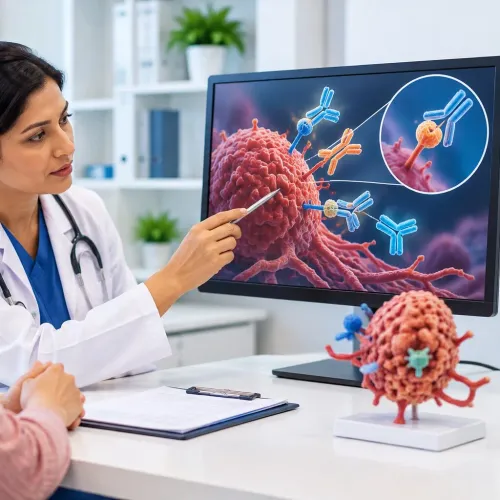
Chemotherapy kills rapidly dividing cancer cells. HER2-targeted therapy treats HER2-positive disease, while endocrine therapy blocks hormonal signals or lowers hormone availability in hormone-receptor-positive breast cancer. Endocrine therapy is different from chemotherapy and often continues for at least five years.
How do stage, tumour biology and inherited risk change the treatment plan?
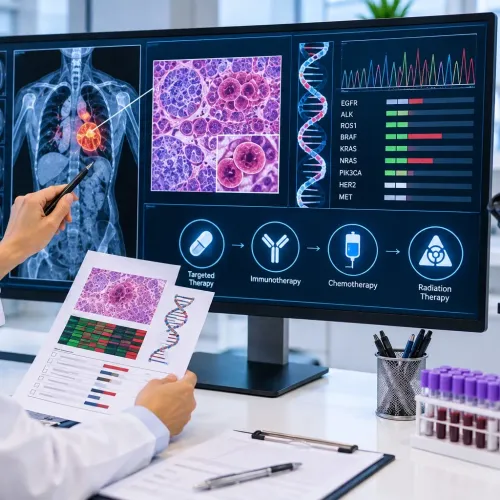
Pathology and staging determine whether treatment aims to remove early-stage breast cancer, reduce recurrence risk, or control metastatic breast cancer. The report should record histologic type and grade, estrogen and progesterone receptors, HER2, and Ki-67 when clinically relevant. These tumour biomarkers can change drug choices more than tumour size alone.
- In early-stage breast cancer, tumour size, margins, lymph nodes, biology and response to treatment guide surgery, chemotherapy, endocrine therapy, HER2-directed treatment and radiotherapy. Breast-conserving surgery usually requires radiotherapy, while mastectomy does not automatically eliminate it; tumour and nodal features decide.
- In metastatic breast cancer, treatment usually aims to control disease, prolong life and protect quality of life rather than promise a cure. Doctors consider receptor status, previous treatment, symptoms, sites of spread and your goals. A repeat biopsy can help because tumour biomarkers change over time.
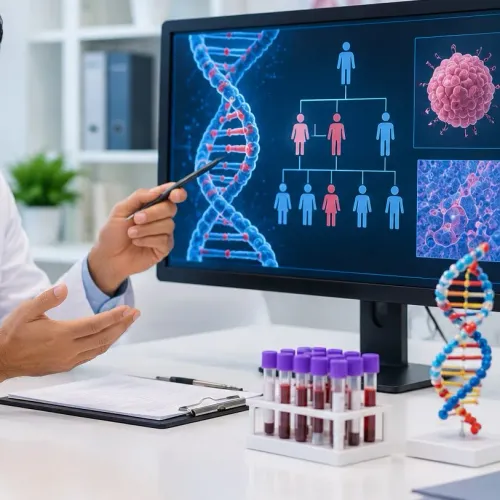
- Genetic counselling and germline testing matter when diagnosis occurs young, in male breast cancer, or when relatives have ovarian cancer or pancreatic cancer. Multiple affected relatives or an identified pathogenic variant also strengthens the case. Results can change systemic treatment, screening and risk-reducing surgery for you or relatives.
Dr Gawande Oncocare Centre can help coordinate personalised cancer care across surgery, drug treatment and supportive decisions, with quality of life included in treatment planning.
Related services
Consultation A cancer surgery consultation is a critical first step in your treatment journey. View service → |
Treatments Chemotherapy At Gawande Oncocare Centre, we understand that fighting cancer is about more than just medicine; it is about maintaining your quality of life. |
Frequently asked questions
Which breast changes need prompt medical review?
Seek prompt medical review for a new breast lump, thickening, persistent swelling, skin dimpling, peau d’orange skin, nipple inversion, spontaneous or bloody nipple discharge, or a change in breast size or shape.
What should you do after finding a breast change?
Arrange a medical assessment rather than trying to diagnose the change yourself. A clinician can examine your breast and recommend the appropriate imaging or biopsy.
How is breast cancer diagnosed and staged?
Assessment can include a clinical examination, mammography, ultrasound, and a tissue biopsy. Further tests establish the cancer’s extent and stage.
Which treatments are used for breast cancer?
Treatment options include surgery, radiotherapy, chemotherapy, hormone therapy, targeted therapy, and immunotherapy, selected according to the cancer’s features and extent.
How do stage, tumour biology and inherited risk change the treatment plan?
Stage shows how far the cancer has spread, tumour biology identifies treatments it may respond to, and inherited risk can affect genetic counselling, surgery, and treatment decisions.